
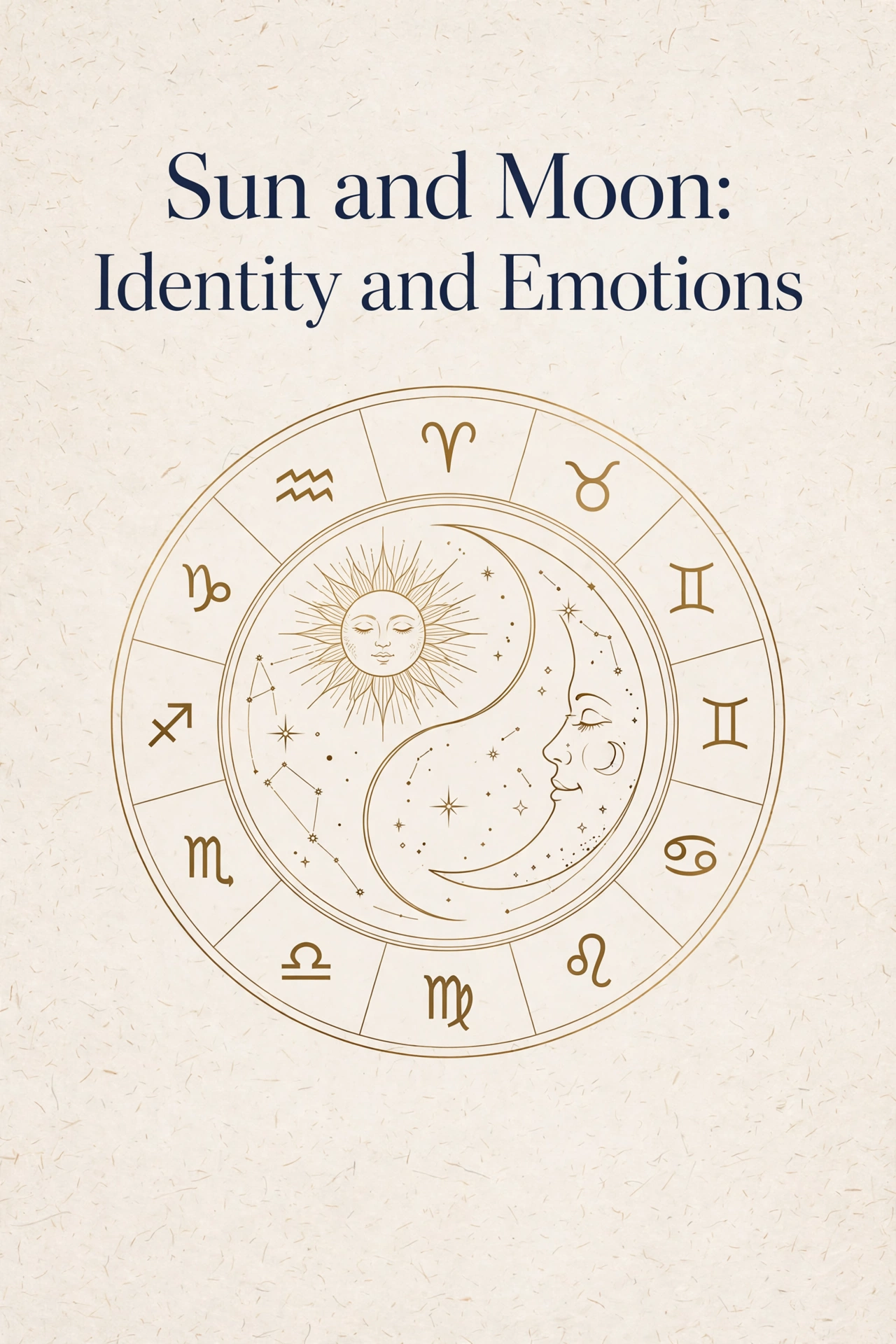
The Sun and Moon are the two fundamental axes of your identity and emotions in the birth chart. Together, the Sun and Moon shape the outward and inward aspects of personality; the key differences and reading steps you will learn here will help you interpret your chart simply and effectively.
Sun: Identity, Ego, and Life Force
The Sun represents the ego center, life force, and our fundamental purposes in the birth chart. The Sun explains the core of who we are, our personal driving force, and our desire for recognition; it shows in which area we will shine and in which roles we prefer to exist [1][2]. The zodiac sign of the Sun describes the color and tones of your inner light; the house it occupies indicates in which area of life this energy will be expressed.
The strong aspects of the Sun include confidence, determination, creativity, leadership, and a sense of continuity. Its challenges can be excessive self-centeredness, neglecting the needs of others, or one-sided pride [2][6]. The Sun is also associated with the father figure, professional image, and our visibility in society [5].
Tip for beginners: Find your Sun sign and the house it occupies; then check if the Sun has any hard or harmonious aspects. These aspects show how Sun energy operates.
Moon: Emotions, Needs, and Inner World
The Moon symbolizes our inner world and emotional needs. The Moon is related to nurturing, the search for security, our habits, the atmosphere of our childhood, and maternal experiences. The Moon reflects our instinctive responses, automatic emotional habits, and spiritual rhythms [3][4].
The sign of the Moon indicates in what conditions you will feel secure and how you process your emotions. The house of the Moon specifies in which area of life these needs will manifest (e.g., the 4th house represents home, roots, and family; the 7th house relates to the pursuit of security in close relationships). The cycles and phases of the Moon influence your daily mood and emotional rhythm; the Moon is an energy that comes from the unconscious and is harder to manage consciously [4][3].
Tip for beginners: Note which element (water, earth, air, fire) your Moon sign belongs to. This helps understand the nature of your emotional reflexes.
Two Lights: The Relationship and Balance of Sun and Moon (Sun and Moon)
The Sun and Moon together form “two lights”: the Sun represents conscious identity, while the Moon represents unconscious needs. The relationship between these two lights reveals the harmony or conflict between a person’s inner world and their expression in the outer world. Sun-Moon aspects indicate which themes will frequently arise in your life and how your emotions interact with your ego [1][2].
- Harmonious aspects (trine, sextile): Inner needs and outward goals integrate more easily.
- Challenging aspects (square, opposition): Tensions arise between emotions and identity, creating areas that require learning and opportunities for transformation.
- Close conjunction: When the Sun and Moon are almost in the same place, self and emotion are intertwined; there is a strong integration, but the boundaries between individuality and emotion can be blurred.
Understanding this relationship allows you to take practical steps to achieve balance between your emotions and identity. For example, during dominant ego moments, Moon rituals and daily habits that meet emotional and security needs can be helpful.
Difference Between Sun Sign and Moon Sign
Let’s clearly differentiate the fundamental differences between the Sun sign and the Moon sign:
- Sun: Conscious identity, life purpose, outward personality. It is more stable over time; it indicates long-term orientation [2][6].
- Moon: Emotional needs, instant reactions, quest for inner security. It is more changeable; it affects daily mood and habits [3][4].
- Public vs Private: The Sun typically represents the public image, while the Moon represents our natural state at home and in close relationships.
- Example: A person with Sun in Aries and Moon in Taurus may appear assertive, quick, and adventurous outside; however, they need a slow, stable, and security-seeking nature inside.
Looking at Sun and Moon in Chart Reading
Practical steps to follow when reading the Sun and Moon in the birth chart:
- Identify the signs and houses of the Sun and Moon. This information forms the framework for your core interpretation.
- Examine the ruler of each and their condition in the house. Look at how the ruler’s position supports or restricts them.
- Check the aspect between the Sun and Moon: evaluate the type and orb of the relationship.
- Analyze which other planets are making challenging or supporting aspects to the Sun or Moon and what themes they trigger.
- Inquire about the house positions in the chart: in which area can the Sun bring recognition; in which area does the Moon create a need for security.
- Practical: Summarize in a short sentence what the Sun directs you to do and what the Moon needs. This provides a tangible roadmap for the client.
Important tip: The Sun shows your outward goals, while the Moon indicates which emotional support you need to pursue these goals. Consider both simultaneously; neither is sustainable without the other.
Summary / Key Points
- The Sun is the center of your identity, life force, and desire for recognition; the Moon is the mirror of your emotional needs, inner security, and automatic responses.
- The Sun-Moon relationship shows the balance between identity and emotions and potential tension areas; interpret the aspects carefully.
- Evaluating sign + house + aspect + ruler together in chart reading yields the most accurate results.
- Practical start: Formulate a sentence about the Sun and Moon — “My Sun directs me to … ; my Moon needs … .” This connects your interpretation to daily life.
Beginner series — other lessons:
Bir yanıt yazın
Yorum yapabilmek için oturum açmalısınız.