
This article is for informational purposes only and does not constitute medical advice. Always consult a healthcare professional before trying any herbal mixture, especially if you are taking medication or are pregnant.
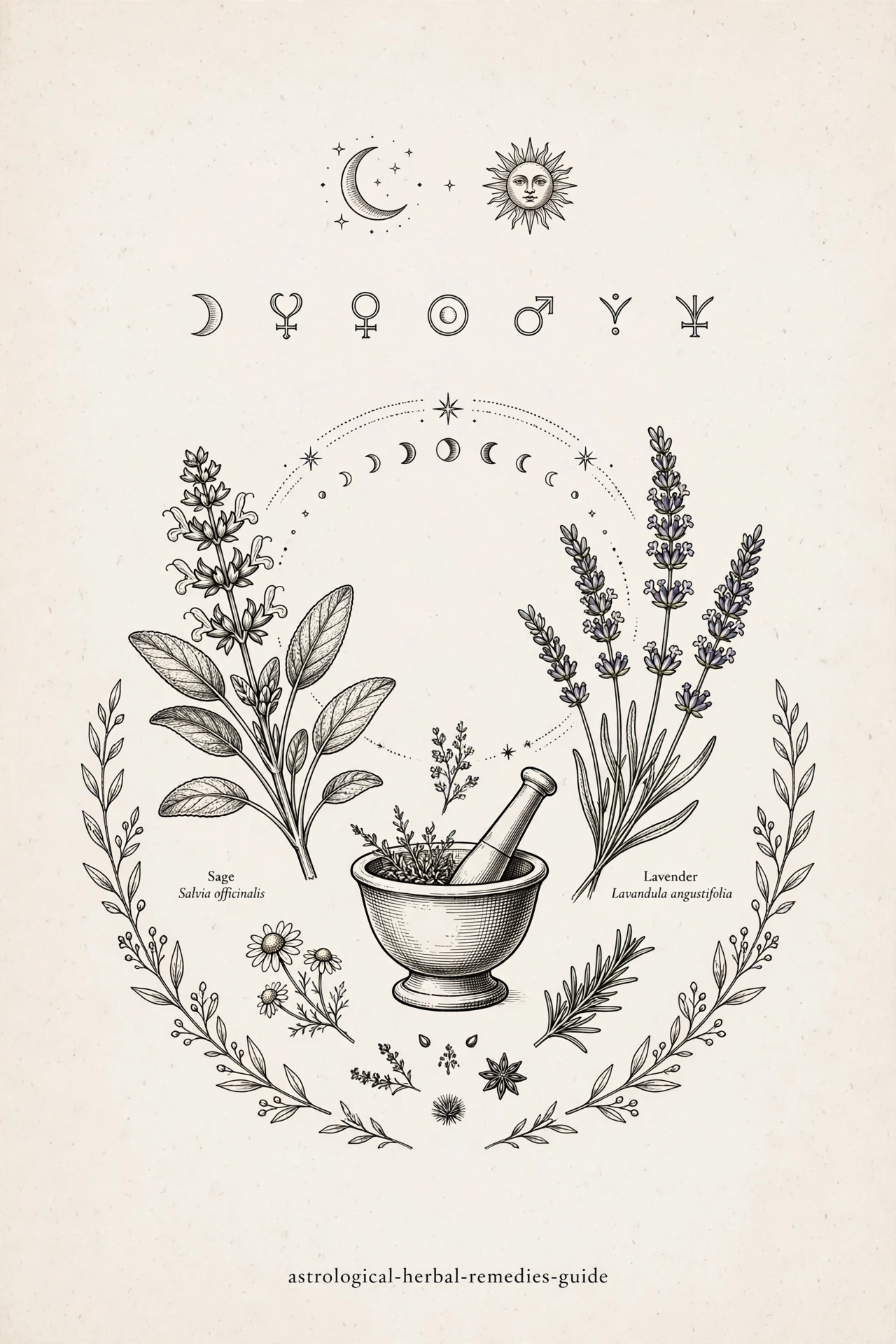
\n\nThe question “Which plant belongs to which planet?” may seem modern, but it actually reaches into the roots of one of the oldest branches of astrology, astrological herbalism. The work titled “Complete Herbal,” written by 17th-century English herbalist Nicholas Culpeper, categorizes almost every plant under the influence of a planet — mint belongs to Mercury, chamomile to the Sun, and nettle to Mars. In this article, we explore both this tradition and how these herbs are prepared and used today.
\n\nHerbs According to Planets
\n- \n
- Sun: Chamomile, Angelica — revitalizing plants that support the heart and digestion. \n
- Moon: Lemon Balm, Willow — calming plants that support emotional balance. \n
- Mercury: Peppermint, Fennel — plants that support mental clarity and digestion. \n
- Venus: Rose, Yarrow — balancing plants associated with skin and heart. \n
- Mars: Ginger, Nettle — energizing and warming plants. \n
- Jupiter: Dandelion, Milk Thistle — “expansive” plants that support liver function. \n
- Saturn: Comfrey, Horsetail — structural, bone/joint supportive plants. \n
Practical Use: Which Herb for What?
\nDigestive Support
\nPeppermint, ginger, and fennel are the most classic friends of the digestive system. Peppermint is said to soothe indigestion and restless bowel complaints by relaxing gastrointestinal muscles; ginger is known to reduce nausea and facilitate digestion.
\nRelaxation and Sleep
\nChamomile, lemon balm, valerian, and passionflower — this quartet forms the basis of traditional “calming tea” mixtures. A sample recipe: equal parts ashwagandha root, lavender flower, and passionflower are mixed; one tablespoon of the mixture is steeped in two cups of hot water for 10-15 minutes, strained, and consumed twice daily, especially before bedtime.
\nImmune Support
\nAstragalus, echinacea, and elderberry are among the most frequently used herbs to support the immune system — astragalus particularly stands out as a herb said to support overall resilience and vitality.
\nLiver / Detox
\nMilk thistle is known for its protective effects on the liver, while dandelion and burdock root are recognized as plants that support liver and kidney functions.
\nEnergy and Adaptogens
\nGinseng, ashwagandha, and rhodiola — this family of plants known as “adaptogens” are thought to support the body’s ability to adapt to stress. A sample energy blend: equal parts rhodiola root, ginseng root, and astragalus root are combined.
\n\nPreparation Methods
\n- \n
- Infusion: Soaking soft plant parts (leaves, flowers) in hot water for a short time. \n
- Decoction: Boiling hard parts such as roots and bark for a longer time. \n
- Tincture: Extracting the plant with alcohol or vinegar — provides a long shelf life. \n
- Ointment: Oil-based extraction of the plant for topical applications. \n
Safety and Considerations
\nBeing herbal does not mean “side effect-free.” Some herbs, like turmeric and ginger, can interact with blood-thinning medications; a daily serving limit is recommended for many teas (for example, some recipes are limited to a single cup per day). If you are taking medication, pregnant, or have a chronic condition, always consult a healthcare professional before starting any herbal mixture.
\n\nPlanetary Hours: When to Harvest the Plant?
\nIn traditional astrological herbalism, it is not only important to know “which plant belongs to which planet” but also “when it should be harvested/prepared.” Based on the belief that each hour of the day is governed by a planet, for example, Venus plants are considered “more harmonious” if harvested on Friday (Venus’s day) or during the hour of Venus. While this may not be widely practiced in modern foraging, it is a colorful detail showing how the tradition spreads the relationship with the plant to a more ritualistic time.
\n\nAstrological Herbalism is Not a Prescription
\nThe information on which planet a plant belongs to is a historical-symbolic classification — not a scientific treatment guide. You can think of this information as a cultural layer that adds meaning to your relationship with plants; always base your actual usage decisions on safety information and consult an expert when necessary.
\n\nDiscover the Planetary Emphasis in Your Birth Chart
\nIf you are curious about which planet’s plant resonates most with you, knowing which planet stands out in your birth chart may be an interesting starting point. Calculate your free birth chart.
\n\nIn Summary
\n- \n
- Astrological herbalism is a centuries-old symbolic tradition linking each plant to a planet’s governance (Culpeper’s “Complete Herbal” is one of the classic references). \n
- Herbs are prepared in the form of infusions, decoctions, tinctures, or ointments for purposes such as digestion, relaxation/sleep, immunity, liver/detox, and energy. \n
- Safety is crucial: drug interactions and dosage limits should not be overlooked. \n
- This information is a cultural/symbolic layer and does not replace medical advice — consult an expert for real health decisions. \n
Bir yanıt yazın
Yorum yapabilmek için oturum açmalısınız.